
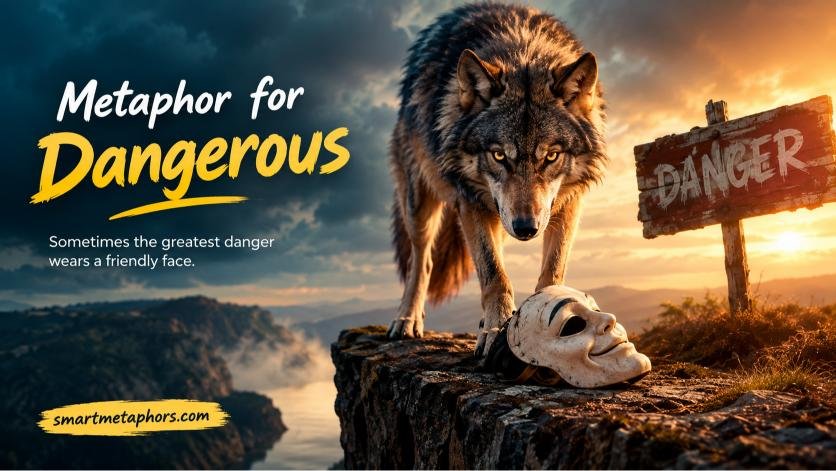
A metaphor for dangerous can make the idea of danger much more vivid than simply using words such as risky, unsafe, or threatening. A dangerous person can become a ticking time bomb, while a dangerous situation can become a thin sheet of ice over deep water.
Metaphors allow writers to show what danger feels like. They can communicate fear, unpredictability, hidden threats, violence, or serious risk while giving readers a strong mental picture.
Whether you’re writing a story, poem, essay, speech, description, or social media caption, choosing the right metaphor can make your writing sharper and more memorable.
Key Takeaways
- Metaphors can make danger easier to visualize.
- Different metaphors communicate different types of risk.
- Some metaphors suggest hidden danger, while others show immediate threats.
- Tone matters when describing dangerous people or situations.
- Strong metaphors are specific, clear, and appropriate for the context.
- Original comparisons can make descriptions more memorable.
What Is a Metaphor?
Definition of a Metaphor
A metaphor directly compares one thing to another without using “like” or “as.”
For example:
“The abandoned house was a trap.”
The house is not literally a trap. The metaphor suggests that entering it could lead to danger.
Why Metaphors Are Useful
Metaphors help writers:
- Create vivid mental images.
- Show danger instead of simply naming it.
- Build suspense.
- Communicate emotional intensity.
- Make descriptions more memorable.
How Metaphors Express Danger
Danger can take many forms.
It can be:
- Immediate
- Hidden
- Unpredictable
- Violent
- Gradual
- Emotional
- Environmental
- Psychological
A ticking time bomb suggests danger that is building toward an explosion.
A wolf in the shadows suggests a threat that is hidden.
A minefield suggests a situation where one wrong move could cause serious consequences.
The metaphor you choose should match the particular kind of danger you want readers to understand.
Metaphors for Dangerous
Powerful Metaphors for Danger
A ticking time bomb
Meaning: A person or situation that could suddenly become dangerous.
Best Use: Unpredictable situations or people.
Tone: Dramatic
A loaded gun
Meaning: Something or someone with the potential to cause serious harm.
Best Use: Fiction and intense descriptions.
Tone: Powerful
A sleeping volcano
Meaning: A dangerous threat that appears quiet but could suddenly become active.
Best Use: Hidden or unpredictable danger.
Tone: Dramatic
A storm waiting to break
Meaning: Trouble that has not happened yet but seems close.
Best Use: Suspenseful writing.
Tone: Foreboding
A snake in the grass
Meaning: A hidden and potentially harmful threat.
Best Use: Describing deceptive people.
Tone: Suspicious
A blade in the darkness
Meaning: A danger that is difficult to see or predict.
Best Use: Mystery and thriller writing.
Tone: Dark
A fire beneath the floor
Meaning: A hidden problem that could become destructive.
Best Use: Figurative descriptions of growing conflict.
Tone: Serious
A storm with teeth
Meaning: A powerful and threatening force.
Best Use: Creative fiction.
Tone: Intense
A wolf at the door
Meaning: A serious threat approaching.
Best Use: Storytelling and dramatic writing.
Tone: Foreboding
A trap disguised as a doorway
Meaning: Something that appears safe but conceals danger.
Best Use: Describing deceptive situations.
Tone: Mysterious
Metaphors for a Dangerous Person
A walking warning sign
Meaning: Someone whose behavior clearly signals trouble.
Best Use: Character descriptions.
Tone: Direct
A storm in human form
Meaning: A person who brings chaos and danger.
Best Use: Fiction and dramatic descriptions.
Tone: Dramatic
A knife with a smile
Meaning: Someone who appears friendly but may be harmful.
Best Use: Describing deceptive personalities.
Tone: Dark
A match beside gasoline
Meaning: A person who can quickly turn a situation into a serious problem.
Best Use: Describing volatile personalities.
Tone: Intense
A wolf wearing a friendly face
Meaning: Someone who hides harmful intentions behind friendliness.
Best Use: Character development.
Tone: Suspicious
A thundercloud with a heartbeat
Meaning: A person whose presence creates tension and fear.
Best Use: Literary writing.
Tone: Poetic
A fire wearing human skin
Meaning: Someone whose actions are destructive and difficult to control.
Best Use: Dramatic fiction.
Tone: Powerful
A grenade with a pulse
Meaning: A highly unpredictable person.
Best Use: Informal creative writing.
Tone: Intense
A shadow carrying a secret
Meaning: Someone who seems mysterious and potentially threatening.
Best Use: Mystery writing.
Tone: Mysterious
A storm behind a calm face
Meaning: Someone who appears peaceful but hides dangerous emotions or intentions.
Best Use: Character descriptions.
Tone: Psychological
Metaphors for a Dangerous Situation
A minefield
Meaning: A situation where one wrong move could create serious consequences.
Best Use: Conflict or difficult decisions.
Tone: Serious
Thin ice
Meaning: A risky situation that could quickly become worse.
Best Use: Everyday and professional writing.
Tone: Cautionary
A house of cards
Meaning: A fragile situation that could collapse suddenly.
Best Use: Unstable circumstances.
Tone: Cautionary
A bridge missing its middle
Meaning: A dangerous situation lacking a safe path forward.
Best Use: Creative descriptions.
Tone: Symbolic
A road through a thunderstorm
Meaning: Moving through a situation filled with uncertainty and risk.
Best Use: Life challenges and storytelling.
Tone: Reflective
A rope over a canyon
Meaning: A situation where failure could have serious consequences.
Best Use: Dramatic writing.
Tone: Tense
A glass floor above an abyss
Meaning: Something that appears stable but has hidden vulnerability.
Best Use: Psychological or literary writing.
Tone: Dark
A matchbox in a wildfire
Meaning: A small problem existing within a much larger danger.
Best Use: Conflict descriptions.
Tone: Dramatic
A door opening into darkness
Meaning: Entering an uncertain and potentially dangerous situation.
Best Use: Mystery and suspense.
Tone: Mysterious
A candle in a hurricane
Meaning: Extreme vulnerability in a dangerous environment.
Best Use: Emotional or literary writing.
Tone: Poetic
Metaphors for Hidden Danger
A shark beneath calm water
Meaning: Danger that cannot be seen immediately.
Best Use: Suspenseful writing.
Tone: Suspicious
Poison in a glass of water
Meaning: Something harmful disguised as harmless.
Best Use: Deception and betrayal.
Tone: Dark
A thorn beneath a rose
Meaning: A hidden danger beneath something beautiful.
Best Use: Romantic or literary writing.
Tone: Elegant
A trap beneath the carpet
Meaning: A threat deliberately concealed.
Best Use: Mystery writing.
Tone: Suspenseful
Darkness behind a bright window
Meaning: Danger hidden behind an innocent appearance.
Best Use: Character or setting descriptions.
Tone: Mysterious
A snake beneath the leaves
Meaning: A threat hidden in an ordinary environment.
Best Use: Suspense and storytelling.
Tone: Tense
A crack beneath fresh paint
Meaning: A serious problem hidden beneath a pleasant surface.
Best Use: Social or emotional situations.
Tone: Thoughtful
A shadow under the sunlight
Meaning: Something threatening hiding within an apparently safe situation.
Best Use: Literary writing.
Tone: Poetic
Nature-Inspired Metaphors for Dangerous
A raging wildfire
Meaning: A destructive force that spreads rapidly.
Best Use: Conflict and emotional writing.
Tone: Powerful
A lightning strike
Meaning: Sudden and potentially devastating danger.
Best Use: Unexpected events.
Tone: Dramatic
A crashing wave
Meaning: An overwhelming force that can suddenly overpower someone.
Best Use: Emotional and environmental writing.
Tone: Powerful
A collapsing mountain
Meaning: An enormous threat that is difficult to escape.
Best Use: Dramatic storytelling.
Tone: Epic
A hurricane with no warning
Meaning: Sudden and uncontrollable danger.
Best Use: Unexpected situations.
Tone: Intense
A river after the storm
Meaning: A dangerous force that has become unpredictable.
Best Use: Nature descriptions.
Tone: Dramatic
A forest after dark
Meaning: A familiar place transformed into something uncertain and threatening.
Best Use: Horror and suspense.
Tone: Eerie
An ocean hiding a whirlpool
Meaning: Calm surroundings concealing serious danger.
Best Use: Symbolic writing.
Tone: Mysterious
Funny Metaphors for Dangerous
A toddler with a flamethrower
Meaning: Someone completely unprepared to handle something dangerous.
Best Use: Humor and casual writing.
Tone: Funny
A cat with a chainsaw
Meaning: A ridiculous combination of innocence and danger.
Best Use: Comedic writing.
Tone: Absurd
A firecracker in a library
Meaning: Something dangerously out of place.
Best Use: Humor.
Tone: Playful
A bull in a glass shop
Meaning: Someone likely to cause damage through careless behavior.
Best Use: Funny descriptions.
Tone: Humorous
A race car with no brakes
Meaning: Someone or something moving toward trouble without control.
Best Use: Casual writing.
Tone: Funny and dramatic
Literary and Poetic Metaphors for Danger
A black cloud over paradise
Meaning: Danger threatening an otherwise beautiful situation.
Best Use: Poetry and fiction.
Tone: Poetic
A dagger hidden in a rose
Meaning: Beauty concealing harm.
Best Use: Literary writing.
Tone: Elegant and dark
A moonless path through the forest
Meaning: An uncertain journey filled with hidden risks.
Best Use: Poetry and storytelling.
Tone: Mysterious
A beautiful song with a deadly final note
Meaning: Something attractive that eventually becomes harmful.
Best Use: Literary descriptions.
Tone: Haunting
A golden door leading into a storm
Meaning: An attractive opportunity that conceals serious danger.
Best Use: Symbolic writing.
Tone: Dramatic
Professional Metaphors for Dangerous Situations
A red flag on the horizon
Meaning: A warning that something may become dangerous.
Best Use: Business and formal writing.
Tone: Professional
A fault line beneath the surface
Meaning: A hidden weakness that could trigger major problems.
Best Use: Business, economics, and organizational writing.
Tone: Analytical
A weak link in the chain
Meaning: A vulnerable point that could cause larger problems.
Best Use: Professional writing.
Tone: Formal
A storm gathering on the horizon
Meaning: A serious problem developing gradually.
Best Use: Reports and analysis.
Tone: Professional
A crack in the foundation
Meaning: A small weakness that could eventually threaten the whole structure.
Best Use: Business and organizational contexts.
Tone: Serious
Simple Metaphors for Beginners
A ticking bomb
A dark cloud
A sharp knife
A hungry wolf
A raging fire
A broken bridge
A deep pit
A stormy sea
A hidden trap
A dangerous road
These simple metaphors are easy for students to understand and can be adapted for essays, stories, and classroom assignments.
Metaphor vs Simile
What Is a Metaphor?
A metaphor makes a direct comparison.
Example:
“The situation was a minefield.”
What Is a Simile?
A simile compares two things using “like” or “as.”
Example:
“The situation was like a minefield.”
Which One Creates Stronger Imagery?
Metaphors often sound more direct and powerful because they allow the comparison to become part of the description itself.
Similes can be useful when you want to make the comparison more obvious or gentle.
How to Choose the Right Metaphor for Dangerous
Identify the Type of Danger
Ask what makes the subject dangerous.
Is it:
- Unpredictable?
- Hidden?
- Violent?
- Fragile?
- Uncontrollable?
- Slowly developing?
The answer will guide your metaphor.
Match the Emotional Intensity
For mild risk, use imagery such as thin ice or a warning sign.
For extreme danger, stronger images such as a raging wildfire or a ticking time bomb may work better.
Match the Context
A professional article may benefit from:
“A fault line beneath the surface.”
A thriller may benefit from:
“A blade in the darkness.”
A humorous story might use:
“A toddler with a flamethrower.”
Think About Your Audience
Choose imagery your readers can understand immediately. A creative metaphor should make an idea clearer, not more confusing.
Expert Writing Tips
Show the Consequence
Instead of simply describing something as dangerous, hint at what could happen.
Weak:
“The road was dangerous.”
Stronger:
“The road was a thin bridge stretched over darkness.”
Use Unexpected Comparisons
Fresh comparisons can make ordinary descriptions memorable.
Think about objects, weather, animals, places, or situations that share the same quality of danger.
Make the Image Specific
Instead of saying:
“It was dangerous.”
Try:
“It was a candle burning inside a room full of gasoline.”
The second version creates a much clearer sense of risk.
Avoid Mixing Metaphors
Don’t combine several unrelated images in one sentence.
Weak:
“He was a ticking bomb sailing through a forest of knives.”
Choose one central image and develop it clearly.
Common Mistakes to Avoid
Using the Same Clichés
Expressions such as “walking disaster” or “ticking time bomb” are familiar. They can work, but original alternatives often create stronger writing.
Making the Metaphor Too Complicated
A metaphor should be imaginative without requiring a paragraph of explanation.
Using the Wrong Tone
A humorous metaphor can weaken a serious scene.
Always consider the emotional atmosphere before choosing your comparison.
Confusing Danger With Evil
Something can be dangerous without being morally evil.
For example, a storm can be dangerous without being “bad.” Keep the metaphor focused on the quality you actually want to communicate.
Frequently Asked Questions
What is a metaphor for dangerous?
A metaphor for dangerous compares something risky or threatening to another powerful image, such as a ticking time bomb, a loaded gun, or a sleeping volcano.
What is a good metaphor for a dangerous person?
A strong metaphor for a dangerous person is “a storm in human form.” It suggests someone whose presence can bring chaos, fear, or destruction.
What is a metaphor for a dangerous situation?
“The situation was a minefield” is a clear metaphor for a situation where one wrong move could have serious consequences.
How do you describe something dangerous creatively?
Compare the danger to something readers already associate with risk, such as fire, storms, predators, sharp objects, collapsing structures, or hidden traps.
What is the difference between a metaphor and a simile for dangerous?
A metaphor makes a direct comparison, such as “The road was a minefield.” A simile uses “like” or “as,” such as “The road was like a minefield.”
Can a metaphor make danger sound less frightening?
Yes. A playful metaphor can soften the description, while dark imagery can make the same danger feel much more threatening.
Conclusion
A strong metaphor for dangerous turns an ordinary description of risk into an image readers can immediately understand and remember. Whether you’re describing a threatening person, an unstable situation, a hidden problem, or an unpredictable environment, the right comparison can add tension and emotional depth.
The most effective metaphors match the type of danger, the tone of the writing, and the audience. From a ticking time bomb to a shark beneath calm water, vivid imagery gives danger a shape that words such as “unsafe” or “risky” often cannot provide.

My Name is Alex Gard. I’m passionate about language, creative writing, and figurative expressions. Through SmartMetaphors, I help readers discover meaningful metaphors, similes, and literary devices to make their writing more engaging and impactful.