
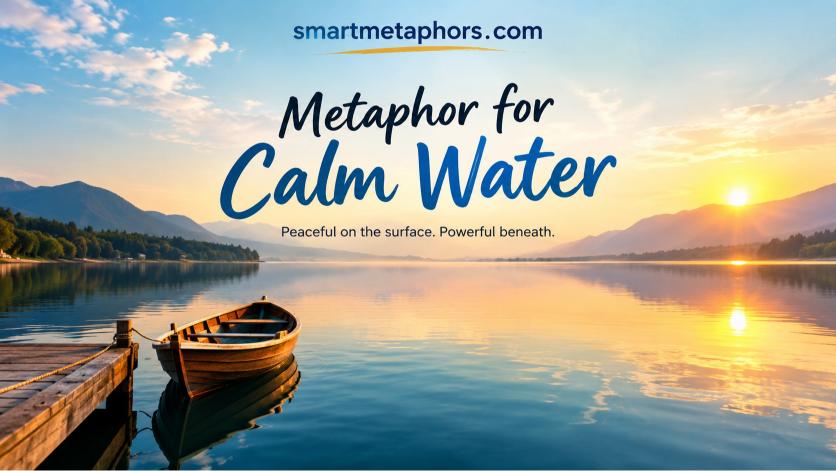
A metaphor for calm water can turn a simple description of a quiet lake, pond, river, or sea into a vivid image of peace and serenity. Instead of simply saying that the water is still, a writer can describe it as a sleeping mirror, a glass floor, or a quiet breath of nature.
Calm water can represent much more than physical stillness. It can symbolize inner peace, emotional balance, reflection, silence, patience, or hope.
Whether you’re writing poetry, fiction, an essay, a caption, or a descriptive passage, the right metaphor can make peaceful water feel almost alive.
Key Takeaways
- Calm water can symbolize peace, silence, reflection, and emotional balance.
- Metaphors make descriptions of still water more vivid.
- Different images create different moods.
- Gentle metaphors work well for peaceful writing.
- More dramatic metaphors can show deep emotional calm after difficulty.
- The strongest metaphors match the setting and purpose of the writing.
What Is a Metaphor?
Definition of a Metaphor
A metaphor directly compares one thing to another without using “like” or “as.”
For example:
“The lake was a sleeping mirror.”
The lake is not literally a mirror. The comparison emphasizes its smooth, reflective surface.
Why Writers Use Metaphors
Metaphors can:
- Create vivid mental pictures
- Express emotions indirectly
- Make descriptions memorable
- Add poetic beauty
- Give ordinary scenes deeper meaning
How Metaphors Express Calm Water
Calm water naturally suggests ideas such as:
- Peace
- Stillness
- Silence
- Reflection
- Patience
- Balance
- Serenity
- Emotional healing
The comparison you choose determines which quality becomes strongest.
For example, “a sleeping mirror” emphasizes stillness, while “a breath of peace” emphasizes emotional calm.
Metaphors for Calm Water
Peaceful and Gentle Metaphors
A sleeping mirror
Meaning: Water so still that it reflects everything around it.
Best Use: Lakes, ponds, and peaceful scenes.
Tone: Peaceful
A blanket of blue
Meaning: Water spreading smoothly and quietly across the landscape.
Best Use: Lakes and seas.
Tone: Gentle
A quiet breath of nature
Meaning: Water creating a calm and relaxing atmosphere.
Best Use: Reflective writing.
Tone: Serene
A sheet of glass
Meaning: Perfectly smooth water with almost no movement.
Best Use: Describing extremely still water.
Tone: Elegant
A blue lullaby
Meaning: Water whose peaceful presence creates a soothing feeling.
Best Use: Poetry and creative writing.
Tone: Dreamy
A silent blanket
Meaning: Water covering the landscape in peaceful stillness.
Best Use: Descriptive nature writing.
Tone: Soft
A quiet cradle
Meaning: Calm water creating a feeling of safety and comfort.
Best Use: Emotional writing.
Tone: Comforting
A pool of silence
Meaning: Water surrounded by an atmosphere of complete quiet.
Best Use: Literary descriptions.
Tone: Mysterious
A peaceful canvas
Meaning: Still water reflecting the colors and shapes around it.
Best Use: Scenic descriptions.
Tone: Artistic
A sleeping ocean
Meaning: A sea temporarily free from strong waves or storms.
Best Use: Coastal writing.
Tone: Poetic
Nature-Inspired Metaphors
A blue meadow
Meaning: A broad, calm stretch of water resembling an open field.
Best Use: Lakes and wide seas.
Tone: Natural
A liquid sky
Meaning: Water reflecting the color and appearance of the sky.
Best Use: Poetic descriptions.
Tone: Dreamy
A mirror of the heavens
Meaning: Calm water reflecting clouds, stars, or sunlight.
Best Use: Poetry.
Tone: Majestic
A glass garden
Meaning: Still water surrounded by natural beauty.
Best Use: Lakes and ponds.
Tone: Delicate
A blue sanctuary
Meaning: Water creating a peaceful refuge.
Best Use: Nature and travel writing.
Tone: Serene
A river asleep
Meaning: A normally moving river appearing unusually quiet.
Best Use: Describing peaceful rivers.
Tone: Poetic
A silver meadow
Meaning: Calm water glowing under moonlight or sunlight.
Best Use: Nighttime or sunset scenes.
Tone: Beautiful
A mirror beneath the clouds
Meaning: Water reflecting the sky above.
Best Use: Scenic writing.
Tone: Visual
Earth’s quiet eye
Meaning: A calm body of water appearing still and observant.
Best Use: Literary writing.
Tone: Thoughtful
A blue sanctuary of silence
Meaning: A peaceful body of water separated from noise and activity.
Best Use: Reflective nature writing.
Tone: Meditative
Poetic Metaphors for Calm Water
A poem without words
Meaning: Water expressing beauty without sound or speech.
A lullaby written in blue
Meaning: The water creates a soothing atmosphere.
A mirror holding the moon
Meaning: Still nighttime water reflecting moonlight.
A whisper beneath the sky
Meaning: Quiet water existing peacefully beneath the open sky.
A dream resting on earth
Meaning: Calm water appearing almost unreal.
A breath between storms
Meaning: A peaceful moment following or preceding turbulence.
A sleeping song
Meaning: Water that appears silent but still feels expressive.
A blue meditation
Meaning: Water creating a deeply peaceful atmosphere.
A still page of nature
Meaning: The surface appears untouched and motionless.
A quiet poem of light
Meaning: Sunlight or moonlight reflecting gently across the water.
Metaphors for Deep Emotional Calm
A heart after the storm
Meaning: Peace that arrives after emotional difficulty.
Best Use: Personal essays and emotional writing.
Tone: Reflective
A mind without waves
Meaning: A peaceful state without worry or disturbance.
Best Use: Describing inner peace.
Tone: Thoughtful
A resting soul
Meaning: Water representing emotional rest.
Best Use: Poetry and reflective writing.
Tone: Emotional
Peace wearing a blue robe
Meaning: Calmness given a visual form through the color of water.
Best Use: Creative writing.
Tone: Poetic
A sanctuary without walls
Meaning: Calm water providing emotional escape.
Best Use: Inspirational writing.
Tone: Peaceful
A pause in the world’s noise
Meaning: Water representing a moment away from stress.
Best Use: Reflective passages.
Tone: Emotional
A healed wound
Meaning: Still water symbolizing recovery after hardship.
Best Use: Deep literary writing.
Tone: Symbolic
A quiet answer
Meaning: Water representing clarity after confusion.
Best Use: Philosophical writing.
Tone: Thoughtful
A resting heartbeat
Meaning: Calm water representing emotional stability.
Best Use: Personal or poetic writing.
Tone: Intimate
A peaceful thought made visible
Meaning: The water becomes an image of inner tranquility.
Best Use: Creative essays.
Tone: Reflective
Romantic Metaphors for Calm Water
A mirror for two hearts
Meaning: Still water reflecting romantic connection.
A blue love letter
Meaning: Water expressing quiet affection.
A peaceful embrace
Meaning: Calm water creating a comforting atmosphere.
A secret shared with the moon
Meaning: Romantic nighttime water imagery.
A quiet dance of light
Meaning: Gentle reflections creating romantic beauty.
A heart-shaped horizon
Meaning: Water and sky creating a romantic scene.
A dream beneath our feet
Meaning: Calm water creating an intimate, dreamlike setting.
A love song without sound
Meaning: Romance expressed through peaceful surroundings.
A mirror of affection
Meaning: Still water reflecting a romantic moment.
A blue promise
Meaning: Calm water representing lasting love or hope.
Short and Simple Metaphors for Beginners
A glass floor
A sleeping mirror
A blue blanket
A quiet lake
A peaceful canvas
A liquid mirror
A blue dream
A silent pool
A sleeping river
A calm breath
These simple metaphors work especially well for students, beginners, short stories, and descriptive essays.
Metaphor vs Simile
What Is a Metaphor?
A metaphor makes a direct comparison.
Metaphor:
“The lake was a sleeping mirror.”
What Is a Simile?
A simile uses “like” or “as” to make the comparison.
Simile:
“The lake was like a sleeping mirror.”
Why Choose a Metaphor?
Metaphors often feel stronger because they directly turn the subject into an image.
Compare:
Simple:
“The water was very calm.”
Simile:
“The water was as calm as glass.”
Metaphor:
“The water was a sheet of glass.”
The metaphor creates a sharper visual image.
How to Choose the Right Metaphor for Calm Water
Consider the Setting
A quiet mountain lake may suit a metaphor about silence, while an ocean at sunset may call for imagery involving light or dreams.
Think About the Emotion
If the water represents healing, choose a metaphor connected to rest or recovery.
If it represents beauty, use imagery involving mirrors, paintings, or light.
Match the Tone
For poetry: Use lyrical imagery.
For essays: Use clear and understandable comparisons.
For fiction: Choose imagery that fits the character’s emotions.
For social media: Keep the metaphor short and memorable.
Expert Writing Tips
Look Beyond the Water’s Surface
Don’t only describe what water looks like. Think about what it means.
Calm water can represent:
- A peaceful mind
- Emotional healing
- A fresh beginning
- Silence
- Patience
- Hope
This gives your metaphor greater depth.
Use Sensory Imagery
Think about what calm water:
- Looks like
- Sounds like
- Feels like
- Reflects
- Does to the surrounding atmosphere
This helps you create more original comparisons.
Create Unexpected Connections
Instead of always comparing calm water to glass or mirrors, connect it with emotions, music, architecture, or human experiences.
For example:
“The lake was a held breath.”
This suggests absolute stillness in a fresh and memorable way.
Keep the Image Clear
Creative does not mean confusing. Readers should understand the connection without needing a long explanation.
Common Mistakes to Avoid
Relying Too Much on Clichés
Comparisons such as “smooth as glass” are familiar and useful, but they may not feel original.
Try giving the image a new angle.
Making the Metaphor Too Complicated
A long chain of comparisons can weaken the central image.
Choose one strong idea and develop it naturally.
Ignoring the Mood
A playful metaphor may feel wrong in a serious or emotional scene.
Always consider what the surrounding writing is trying to communicate.
Describing Only Physical Calm
Calm water can also represent emotional or symbolic calmness. Exploring that deeper meaning can make your writing more powerful.
Frequently Asked Questions
What is a metaphor for calm water?
A metaphor for calm water is a direct comparison that expresses stillness, peace, or serenity. “The lake was a sleeping mirror” is a simple example.
What is a poetic metaphor for calm water?
A poetic metaphor could be “a lullaby written in blue”, which presents calm water as something soothing and beautiful.
What can calm water symbolize?
Calm water can symbolize peace, emotional balance, reflection, healing, patience, silence, and hope.
How do you describe calm water creatively?
You can describe calm water as a sleeping mirror, blue sanctuary, liquid sky, peaceful canvas, or quiet breath of nature.
What is the difference between a metaphor and a simile for calm water?
A metaphor directly compares the water to something else, such as “The lake was a mirror.” A simile uses “like” or “as,” such as “The lake was like a mirror.”
What is a good metaphor for peaceful water?
“The water was a sleeping mirror” is a strong metaphor because it captures both the stillness and reflective quality of peaceful water.
Conclusion
A well-chosen metaphor for calm water can turn stillness into something readers can see, feel, and remember. Calm water can become a sleeping mirror, a blue sanctuary, a liquid sky, or even a quiet answer to emotional confusion.
The strongest metaphor depends on what you want the water to represent. Whether you’re describing natural beauty, inner peace, romance, reflection, or recovery, choose an image that matches the emotion behind the scene.
When you move beyond simply describing water as “calm” and give its stillness a deeper image, your writing becomes more vivid, expressive, and memorable.

My Name is Alex Gard. I’m passionate about language, creative writing, and figurative expressions. Through SmartMetaphors, I help readers discover meaningful metaphors, similes, and literary devices to make their writing more engaging and impactful.