
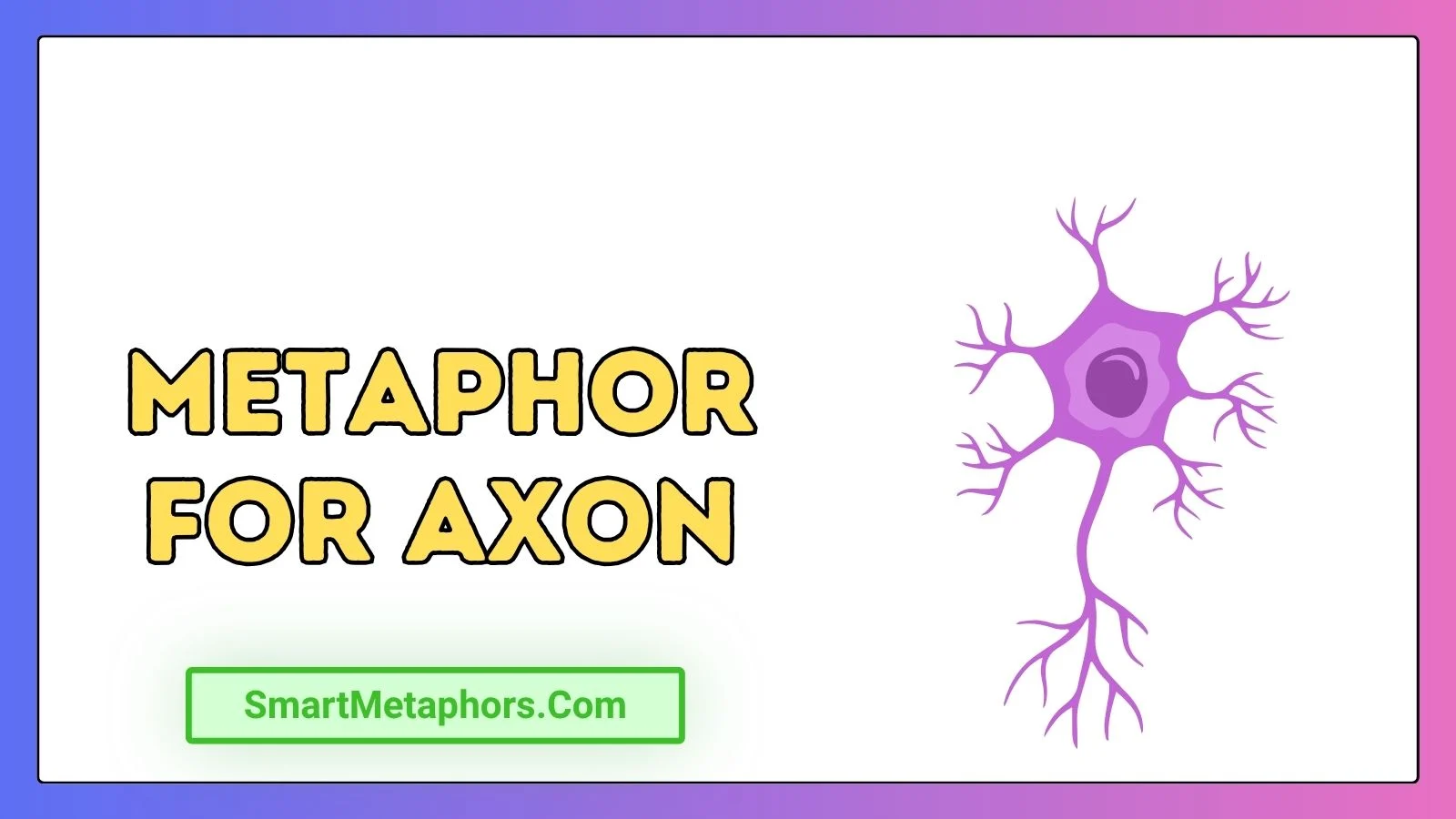
A metaphor for an axon can help transform a complex scientific concept into something simple, memorable, and engaging. Since axons are responsible for carrying electrical impulses between neurons and throughout the body, they naturally lend themselves to metaphors involving travel, communication, and connection.
Whether you’re a student, teacher, science writer, or creative writer, using metaphors can make neuroscience more accessible and enjoyable to understand.
Key Takeaways
- Axons are often described as pathways, highways, or messengers.
- Metaphors make scientific concepts easier to visualize.
- Different metaphors emphasize communication, speed, protection, or connectivity.
- Creative comparisons improve both learning and writing.
- Context and audience matter when choosing the right metaphor.
What Is an Axon?
Definition of an Axon
An axon is the long, slender part of a neuron that carries electrical signals away from the cell body to other neurons, muscles, or glands.
Why Writers and Teachers Use Metaphors for Axons
Scientific terms can sometimes feel abstract. Metaphors help explain how an axon functions by comparing it to familiar objects and systems.
For example:
“The axon is a biological highway carrying messages across the body.”
This instantly creates a mental image that is easier to understand than a purely technical explanation.
How Metaphors Explain Axons
Axons symbolize:
- Communication
- Connection
- Speed
- Transmission
- Coordination
- Intelligence
- Networking
- Movement
- Information sharing
Good metaphors help readers understand not only what an axon is but also what it does.
Why Writers Use Metaphors for Axons
Simplify Complex Science
Metaphors turn neuroscience into something relatable and easy to visualize.
Improve Learning
Students often remember metaphors better than textbook definitions.
Create Stronger Imagery
Science communication becomes more engaging when scientific concepts are presented creatively.
Metaphors for Axon
Communication-Inspired Metaphors
A biological highway
Meaning: Carries information quickly across long distances.
Best Use: Educational writing.
Tone: Informative.
A messenger road
Meaning: Delivers important signals throughout the body.
Best Use: Classroom explanations.
Tone: Simple.
A neural bridge
Meaning: Connects different parts of the nervous system.
Best Use: Science articles.
Tone: Professional.
An information pipeline
Meaning: Continuously transports messages.
Best Use: Academic content.
Tone: Technical.
A signal expressway
Meaning: Fast and efficient communication.
Best Use: Neuroscience discussions.
Tone: Modern.
Technology-Inspired Metaphors
A living electrical wire
Meaning: Conducts signals throughout the body.
Best Use: Biology lessons.
Tone: Educational.
The body’s internet cable
Meaning: Transfers information between neurons.
Best Use: Student-friendly explanations.
Tone: Modern.
A biological fiber-optic cable
Meaning: High-speed communication within the nervous system.
Best Use: Advanced science writing.
Tone: Professional.
A neural telephone line
Meaning: Allows messages to travel from one location to another.
Best Use: Beginners.
Tone: Conversational.
A natural communication network
Meaning: Functions as part of an interconnected system.
Best Use: General explanations.
Tone: Informative.
Transportation Metaphors
A railway of thoughts
Meaning: Carries signals smoothly across neurons.
A highway of information
Meaning: Rapid message delivery.
A bridge of electricity
Meaning: Connects communication pathways.
A signal train track
Meaning: Guides impulses to their destination.
A neural tunnel
Meaning: Provides a dedicated path for transmission.
Literary and Poetic Metaphors
A whisper traveling through light
Meaning: Delicate but essential communication.
The river of thought
Meaning: Continuous movement of information.
A silver thread of intelligence
Meaning: Represents connection and knowledge.
The body’s secret messenger
Meaning: Quietly coordinates countless processes.
A bridge between thought and action
Meaning: Converts intentions into physical responses.
Nature-Inspired Metaphors
A root of communication
Meaning: Essential support for nervous system function.
A branch carrying life’s messages
Meaning: Distributes signals throughout the body.
A lightning path
Meaning: Rapid electrical transmission.
A flowing stream of signals
Meaning: Constant communication.
A living vine of information
Meaning: Naturally interconnected communication.
Modern and Creative Metaphors
The body’s delivery service
Meaning: Reliably transports messages.
A neural superhighway
Meaning: Efficient and sophisticated communication.
A biological data cable
Meaning: Transfers important information.
A messenger of movement
Meaning: Helps coordinate physical actions.
The nervous system’s postal route
Meaning: Delivers signals precisely where they are needed.
Simple Metaphors for Beginners
A message road
Meaning: Carries information.
A signal bridge
Meaning: Connects neurons.
A communication wire
Meaning: Transfers electrical impulses.
A thinking pathway
Meaning: Helps the brain communicate.
A body’s information road
Meaning: Supports nervous system communication.
Metaphor vs Simile
What Is a Metaphor?
A metaphor directly compares an axon to another object or concept.
Example:
The axon is a neural highway.
What Is a Simile?
A simile compares using “like” or “as.”
Example:
The axon is like a highway carrying messages.
Key Difference
Metaphors create stronger imagery, while similes provide gentler and more explicit comparisons.
How to Choose the Right Metaphor for an Axon
Consider Your Audience
- Students benefit from simple metaphors.
- Teachers may prefer educational comparisons.
- Science writers can use technical imagery.
- Creative writers can use poetic descriptions.
Match the Context
Choose metaphors that emphasize communication, speed, or connection depending on your purpose.
Keep It Scientifically Accurate
The best scientific metaphors simplify concepts without becoming misleading.
Expert Writing Tips
Focus on Function
Think about what an axon does before creating a metaphor.
Use Familiar Objects
Roads, bridges, cables, and rivers are easy for readers to understand.
Avoid Overcomplicating Scientific Concepts
Simple and accurate metaphors are usually the most effective.
Make Learning Visual
The more vivid the imagery, the easier it is to remember.
Common Mistakes to Avoid
Choosing Inaccurate Comparisons
Avoid metaphors that contradict how axons function.
Using Too Much Scientific Jargon
Keep explanations accessible to your audience.
Mixing Multiple Images
Maintain consistency within your metaphor.
Ignoring Context
Educational content and creative writing may require different styles of metaphors.
Frequently Asked Questions
What is a metaphor for an axon?
A metaphor for an axon is a figurative comparison that explains how it carries signals throughout the nervous system using familiar imagery.
What are some creative metaphors for an axon?
Examples include a biological highway, neural bridge, living electrical wire, and river of thought.
Why are metaphors useful in neuroscience?
Metaphors make complex scientific concepts easier to understand, remember, and teach.
What is the difference between an axon metaphor and a simile?
A metaphor makes a direct comparison, while a simile uses “like” or “as.”
Can metaphors improve science education?
Yes. Creative metaphors can significantly improve comprehension and engagement when learning scientific topics.
Conclusion
Using a creative metaphor for an axon is an excellent way to explain one of the nervous system’s most important structures. Whether you describe an axon as a biological highway, a messenger road, or a bridge of electricity, metaphors make neuroscience more approachable and memorable.
By choosing comparisons that highlight communication, connection, and movement, writers and educators can make complex ideas easier to understand while keeping their content engaging and informative.

My Name is Alex Gard. I’m passionate about language, creative writing, and figurative expressions. Through SmartMetaphors, I help readers discover meaningful metaphors, similes, and literary devices to make their writing more engaging and impactful.