
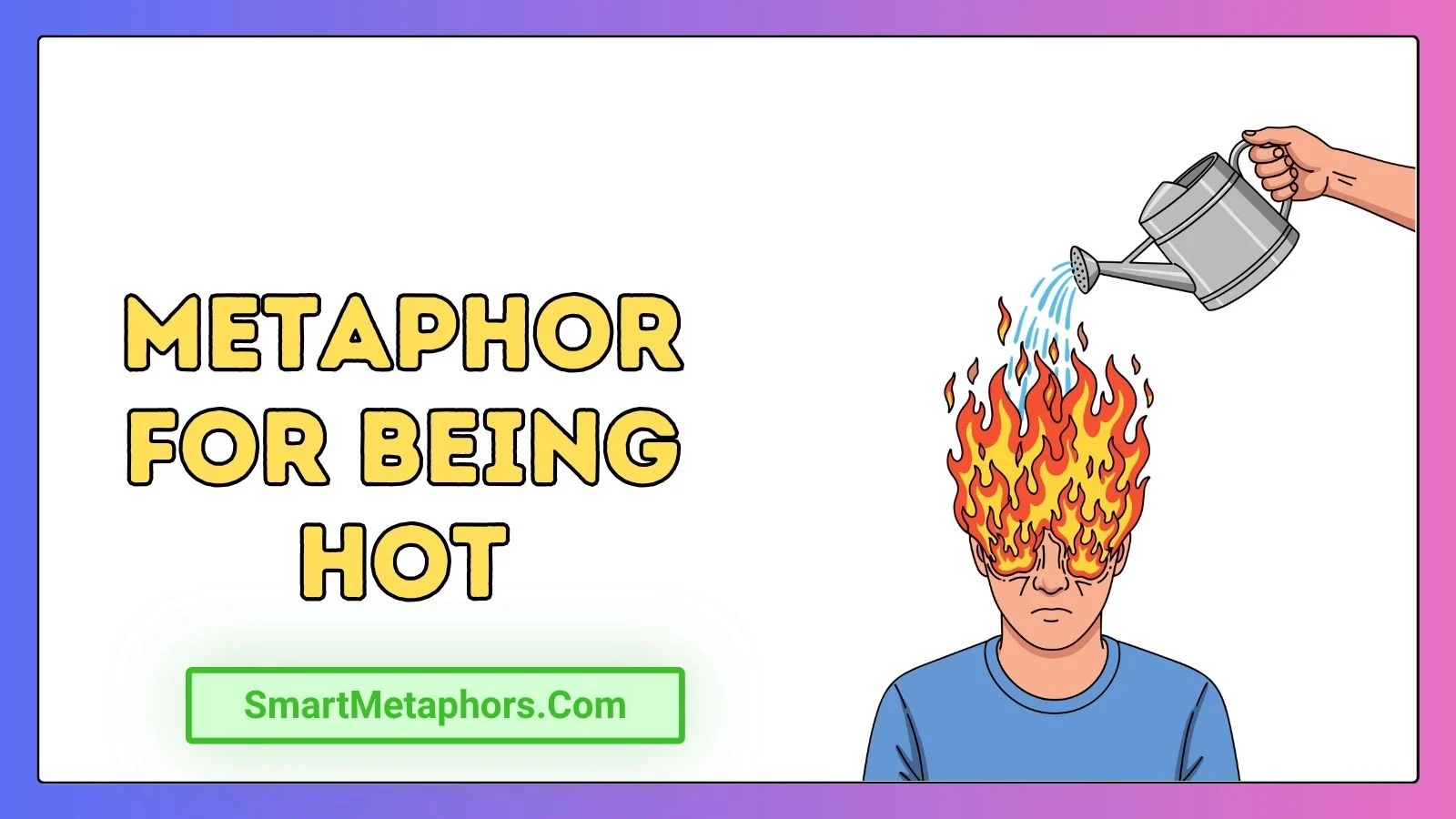
A metaphor for being hot can turn a plain description of heat into vivid imagery that readers can almost feel. Instead of simply saying, “It was very hot,” you can describe the day as an oven, the sun as a blazing furnace, or the air as a blanket of fire.
Metaphors are especially useful when writing about hot weather, summer days, heated rooms, intense situations, or even a person who looks extremely attractive.
This guide explores different ways to express heat through figurative language, from simple expressions for students to dramatic and poetic descriptions for creative writers.
Key Takeaways
- Metaphors make descriptions of heat more vivid.
- Fire, ovens, deserts, sunlight, and flames provide strong imagery for heat.
- The best metaphor depends on the intensity and context.
- Simple metaphors work well for everyday writing.
- Poetic metaphors can make descriptions more emotional and memorable.
- “Hot” can describe temperature, emotions, situations, or physical attractiveness, so context matters.
What Is a Metaphor?
Definition of a Metaphor
A metaphor is a figure of speech that directly describes one thing as another to create a comparison.
For example:
“The city was an oven.”
The city is not literally an oven. The metaphor suggests that the temperature was extremely high.
Why Metaphors Work for Heat
Heat is a physical sensation, but metaphors allow writers to make it visual.
Instead of:
“The sun was very hot.”
You could write:
“The sun was a furnace hanging in the sky.”
The second sentence creates a much stronger mental picture.
How Metaphors Express Being Hot
Heat can have different levels and moods.
Mild Heat
Words and images such as warm blanket, glowing ember, or summer breath suggest pleasant warmth.
Intense Heat
Images such as furnace, oven, wildfire, or boiling kettle suggest uncomfortable heat.
Extreme Heat
Metaphors involving lava, molten metal, or a blazing inferno create a sense of overwhelming temperature.
Attractive Appearance
When “hot” refers to attractiveness, metaphors can use imagery such as fire, magnetism, or a blazing star rather than physical temperature.
Creative Metaphors for Being Hot
Everyday Metaphors for Hot Weather
The afternoon was an oven.
Meaning: The weather was extremely hot.
Best Use: Everyday descriptions and casual writing.
Tone: Simple and relatable.
The city was a furnace.
Meaning: The entire city felt intensely hot.
Best Use: Describing hot urban environments.
Tone: Powerful.
The air was a warm blanket.
Meaning: The air felt thick and warm around you.
Best Use: Mild or humid heat.
Tone: Descriptive.
The pavement was a frying pan.
Meaning: The ground felt extremely hot under the sun.
Best Use: Summer scenes.
Tone: Playful.
The room was a sauna.
Meaning: The room was uncomfortably hot.
Best Use: Casual descriptions.
Tone: Humorous.
The day was a burning blanket.
Meaning: Heat seemed to surround everything.
Best Use: Descriptive writing.
Tone: Dramatic.
The summer sun was a giant lamp.
Meaning: The sun was pouring intense warmth over everything.
Best Use: Simple creative writing.
Tone: Accessible.
The streets were heated iron.
Meaning: The streets felt intensely hot.
Best Use: Urban summer scenes.
Tone: Strong.
The air was soup.
Meaning: The atmosphere felt thick, heavy, and uncomfortable.
Best Use: Hot and humid weather.
Tone: Funny.
The world was under a heat blanket.
Meaning: Everything felt covered by oppressive warmth.
Best Use: Weather descriptions.
Tone: Atmospheric.
Powerful Metaphors for Extreme Heat
The sun was a blazing furnace.
Meaning: The sun produced overwhelming heat.
Best Use: Extremely hot weather.
Tone: Dramatic.
The earth was a skillet.
Meaning: The ground felt unbearably hot.
Best Use: Desert or summer descriptions.
Tone: Vivid.
The sky was a furnace door.
Meaning: Heat seemed to pour directly from above.
Best Use: Dramatic nature writing.
Tone: Intense.
The afternoon was a wildfire.
Meaning: The heat spread everywhere with overwhelming intensity.
Best Use: Creative descriptions.
Tone: Powerful.
The streets were rivers of fire.
Meaning: The heat made the streets feel almost unbearably hot.
Best Use: Poetry and fiction.
Tone: Dramatic.
The sun was a ball of molten gold.
Meaning: The sun appeared intensely hot and powerful.
Best Use: Literary descriptions.
Tone: Poetic.
The desert was a furnace without walls.
Meaning: Heat surrounded everything without relief.
Best Use: Desert scenes.
Tone: Dramatic.
The afternoon was molten glass.
Meaning: The air and landscape seemed to shimmer under extreme heat.
Best Use: Descriptive fiction.
Tone: Artistic.
Funny Metaphors for Being Hot
The weather was a dragon’s breath.
Meaning: The heat felt fierce and unbearable.
Best Use: Funny captions and casual writing.
Tone: Humorous.
The room was a toaster.
Meaning: The room felt extremely warm.
Best Use: Casual conversation.
Tone: Funny.
The sidewalk was a barbecue grill.
Meaning: The pavement became incredibly hot.
Best Use: Summer humor.
Tone: Playful.
The car was a portable oven.
Meaning: A parked car became unbearably hot.
Best Use: Everyday situations.
Tone: Funny.
The sun was cooking the neighborhood.
Meaning: The heat was overwhelming everything outside.
Best Use: Social media or casual writing.
Tone: Humorous.
The air was wearing a sweater.
Meaning: The atmosphere felt unusually heavy and warm.
Best Use: Playful descriptions.
Tone: Quirky.
Summer was a giant hair dryer.
Meaning: Hot air seemed to blow everywhere.
Best Use: Funny summer descriptions.
Tone: Lighthearted.
Nature-Inspired Metaphors for Heat
The sun was a golden flame.
Meaning: The sun radiated powerful warmth.
Best Use: Poetry.
Tone: Beautiful.
Summer was a red ember.
Meaning: The season carried a persistent, glowing heat.
Best Use: Literary writing.
Tone: Poetic.
The horizon was a wall of fire.
Meaning: The distant landscape appeared intensely hot and glowing.
Best Use: Sunset or desert imagery.
Tone: Dramatic.
The earth was breathing fire.
Meaning: The ground seemed to radiate enormous heat.
Best Use: Extreme weather descriptions.
Tone: Powerful.
The sunlight was liquid gold.
Meaning: Warm sunlight spread across the landscape.
Best Use: Pleasant warmth rather than unbearable heat.
Tone: Elegant.
The summer sky was a furnace of blue.
Meaning: A beautiful sky existed alongside intense heat.
Best Use: Literary descriptions.
Tone: Poetic.
The afternoon was a sleeping volcano.
Meaning: The heat felt powerful even without visible flames.
Best Use: Creative writing.
Tone: Mysterious.
The sun was a firebird.
Meaning: The sun seemed alive, powerful, and blazing.
Best Use: Poetry and fantasy.
Tone: Imaginative.
Poetic Metaphors for Being Hot
Heat was a red hand resting on the earth.
Meaning: The temperature seemed to press heavily over everything.
Best Use: Poetry.
Tone: Atmospheric.
Summer was fire dressed in sunlight.
Meaning: The season combined beauty with intense heat.
Best Use: Literary writing.
Tone: Elegant.
The sun poured fire across the fields.
Meaning: Strong sunlight covered the landscape.
Best Use: Nature writing.
Tone: Vivid.
The afternoon wore a crown of flames.
Meaning: The day felt dominated by intense heat.
Best Use: Poetry and fiction.
Tone: Dramatic.
The air was a breath from the sun.
Meaning: The surrounding air felt intensely warm.
Best Use: Creative descriptions.
Tone: Poetic.
The horizon burned beneath the summer sky.
Meaning: The landscape seemed overwhelmed by heat or glowing sunlight.
Best Use: Fiction and poetry.
Tone: Dramatic.
The day was a furnace wrapped in blue.
Meaning: A clear blue sky existed above extreme heat.
Best Use: Descriptive writing.
Tone: Literary.
Metaphors for a Person Feeling Hot
Sometimes “being hot” means a person is physically overheated.
His body was a furnace.
Meaning: He felt extremely hot.
Best Use: Fiction and descriptive writing.
Tone: Strong.
Her skin was a burning ember.
Meaning: Her skin felt intensely warm.
Best Use: Literary descriptions.
Tone: Poetic.
His forehead was a radiator.
Meaning: His body was giving off noticeable heat.
Best Use: Casual or humorous writing.
Tone: Funny.
She was a walking heatwave.
Meaning: She seemed to radiate warmth.
Best Use: Playful descriptions.
Tone: Humorous.
His body was a summer afternoon.
Meaning: He felt intensely warm.
Best Use: Creative fiction.
Tone: Poetic.
Metaphors for Someone Who Is Attractive
“Hot” can also mean physically attractive. In this context, metaphors should communicate admiration rather than literal temperature.
She was a blazing star.
Meaning: Her beauty immediately attracted attention.
Best Use: Romantic writing.
Tone: Admiring.
He was a walking flame.
Meaning: His appearance or presence was striking and powerful.
Best Use: Informal or creative writing.
Tone: Bold.
She was pure electricity.
Meaning: Her presence was exciting and captivating.
Best Use: Romantic descriptions.
Tone: Energetic.
He was a magnet in a crowded room.
Meaning: People were naturally drawn to him.
Best Use: Character descriptions.
Tone: Confident.
She was a spark in the darkness.
Meaning: Her appearance or personality immediately stood out.
Best Use: Romantic or literary writing.
Tone: Poetic.
Metaphor vs Simile
What Is a Metaphor?
A metaphor makes a direct comparison.
“The city was an oven.”
What Is a Simile?
A simile uses “like” or “as” to compare two things.
“The city was like an oven.”
Comparing the Two
Metaphor:
The afternoon was a furnace.
Simile:
The afternoon was like a furnace.
Both communicate intense heat, but the metaphor feels more direct and forceful.
How to Choose the Right Metaphor for Being Hot
Match the Intensity
Use gentle imagery for pleasant warmth:
“The sunlight was liquid gold.”
Use stronger imagery for uncomfortable heat:
“The city was a furnace.”
Use extreme imagery when the heat is overwhelming:
“The earth was breathing fire.”
Think About Your Audience
For children or students, use easy images such as:
- Oven
- Toaster
- Fire
- Blanket
For poetry and fiction, more imaginative images can work:
- Sleeping volcano
- Crown of flames
- Firebird
- Liquid gold
Consider the Setting
A desert, beach, city, kitchen, car, and tropical forest can all feel hot in different ways. Choose an image that naturally fits the environment.
Expert Writing Tips
Turn Heat Into Something Visible
Heat itself can be difficult to visualize. Give it a physical form.
Instead of:
“The heat was terrible.”
Try:
“The heat was a heavy hand pressing against the city.”
Use Movement
Metaphors become more vivid when heat appears to move.
“The sun poured fire across the rooftops.”
The verb poured makes the heat feel active.
Use Unexpected Comparisons
Avoid relying only on fire.
You can compare heat to:
- A heavy blanket
- A locked room
- A breath
- Molten glass
- A radiator
- A dragon
Unexpected imagery can make ordinary descriptions more memorable.
Match Your Verb to Your Metaphor
Strong verbs can amplify the image.
Compare:
“The sun was fire.”
with:
“The sun spilled fire across the fields.”
The second sentence creates movement and atmosphere.
Common Mistakes to Avoid
Using the Same Fire Metaphor Repeatedly
Fire is an obvious symbol of heat, but using it repeatedly can make writing predictable.
Try alternatives such as:
“The city was an oven.”
or:
“The air was a warm blanket.”
Making the Metaphor Too Extreme
If you’re describing a pleasant summer afternoon, calling it “an inferno” may create the wrong impression.
Ignoring Humidity
Hot and dry weather feels different from hot and humid weather.
For humidity, metaphors involving steam, blankets, soup, or trapped air can work particularly well.
Mixing Metaphors
Avoid combining unrelated images:
“The sun was a furnace sailing through a boiling ocean of fire.”
Too many comparisons compete for attention.
Choose one strong image instead.
Frequently Asked Questions
What is a metaphor for being hot?
A metaphor for being hot compares heat to something associated with warmth or intense temperature. For example, “The afternoon was an oven” describes extremely hot weather.
What is a good metaphor for extremely hot weather?
“The city was a furnace” is a clear metaphor for extremely hot weather. More poetic alternatives include “The earth was breathing fire” and “The sky was a furnace door.”
How do you describe hot weather creatively?
Use vivid comparisons involving ovens, fire, sunlight, deserts, molten metal, blankets, or dragons. For example, “The pavement was a frying pan” creates a playful image of extreme heat.
What is a metaphor for feeling hot?
You can say “My body was a furnace” to suggest that you felt extremely warm. For a humorous description, “I was a walking heatwave” works well.
What is a metaphor for someone being hot or attractive?
For attractiveness, you can use metaphors such as “She was a blazing star,” “He was a walking flame,” or “She was pure electricity.”
What is the difference between a metaphor and a simile for hot?
A metaphor makes a direct comparison, such as “The room was an oven.” A simile uses “like” or “as,” such as “The room was like an oven.”
Conclusion
A strong metaphor for being hot can make heat feel visible, physical, and memorable. Whether you’re describing a scorching summer afternoon, a humid room, an overheated person, or someone who is exceptionally attractive, the right comparison adds personality to your writing.
For simple writing, an oven, furnace, or blanket can communicate heat clearly. For creative writing, images such as firebirds, sleeping volcanoes, liquid gold, and crowns of flames can create a richer emotional experience.
The key is to choose an image that matches the temperature, context, audience, and tone. A well-chosen metaphor doesn’t just tell readers that something is hot—it makes them feel the heat.

My Name is Alex Gard. I’m passionate about language, creative writing, and figurative expressions. Through SmartMetaphors, I help readers discover meaningful metaphors, similes, and literary devices to make their writing more engaging and impactful.