
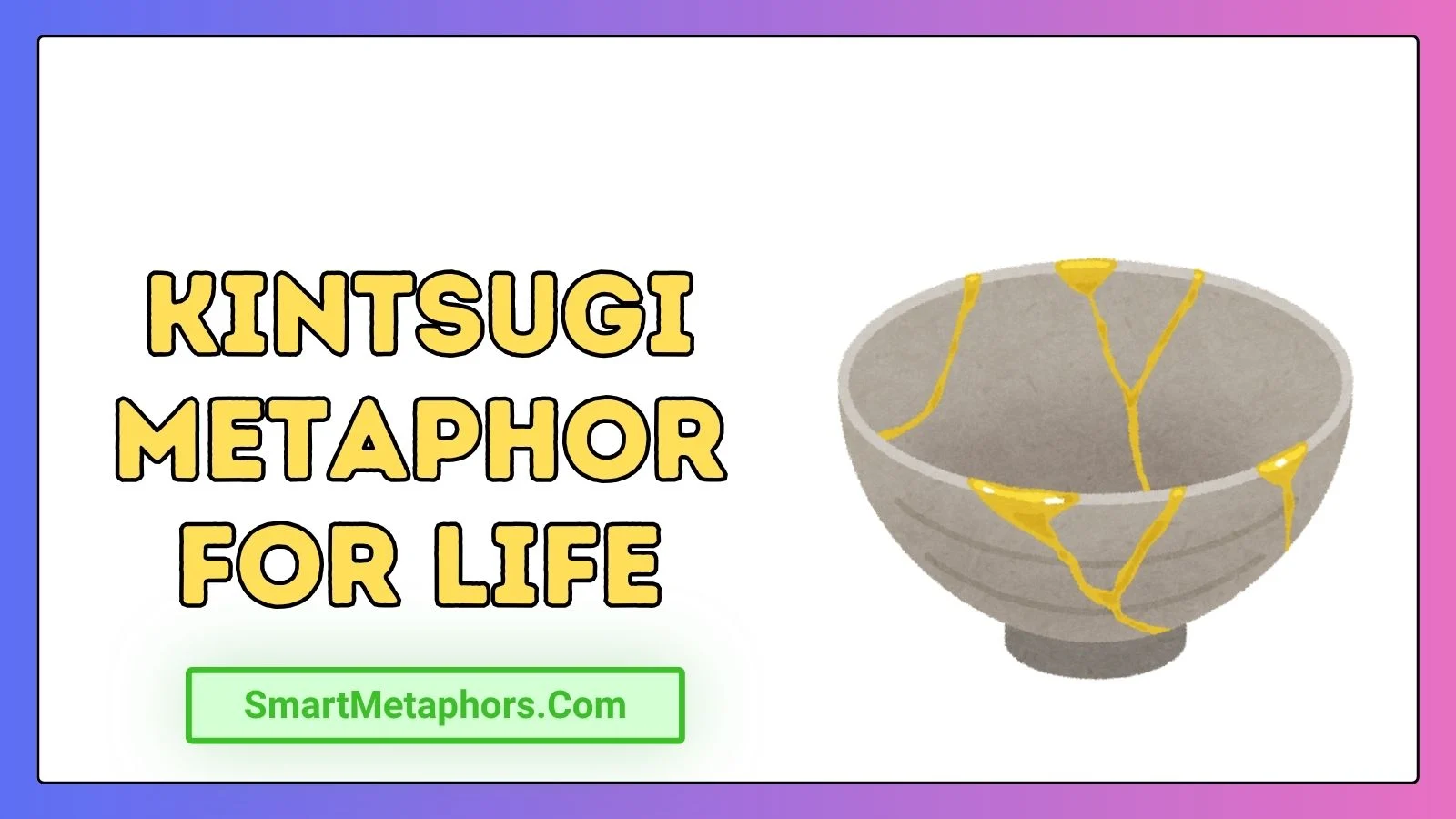
The kintsugi metaphor for life offers a powerful way to understand pain, change, failure, and personal growth. Kintsugi is a Japanese repair tradition in which broken pottery is restored, traditionally highlighting the cracks rather than hiding them.
As a metaphor, the repaired object becomes a picture of a human life.
We all experience moments that leave cracks in our stories. A failed dream, a difficult goodbye, a mistake, or a major change can alter us. Kintsugi reminds us that being changed by those experiences does not mean being ruined.
Sometimes, what we survive becomes part of what makes our lives meaningful.
Key Takeaways
- Kintsugi represents healing without pretending the damage never happened.
- Cracks can symbolize experiences, lessons, scars, and personal growth.
- The metaphor encourages acceptance rather than perfection.
- A person’s past can become part of their strength and identity.
- Kintsugi is especially powerful in writing about resilience, recovery, maturity, and hope.
What Is Kintsugi?
The Meaning of Kintsugi
Kintsugi is a Japanese pottery-repair tradition associated with highlighting repaired cracks rather than attempting to make the broken object look untouched.
The repaired cracks become part of the object’s appearance and history.
This creates a powerful idea:
Broken does not necessarily mean worthless.
Why Kintsugi Works as a Life Metaphor
Human beings also carry marks from their experiences.
A person may become wiser after failure, stronger after hardship, more compassionate after loss, or more confident after overcoming fear.
The “cracks” do not disappear from the story. Instead, they become evidence of what the person has lived through.
The Kintsugi Metaphor for Life
Life Is a Broken Bowl Repaired With Gold
This metaphor suggests that difficult experiences can become part of your strength.
The bowl is not valuable because it was never broken. Its beauty comes from surviving the break and being restored.
Our Scars Are Golden Lines
The scars we carry can represent lessons, memories, and experiences that shaped who we became.
Failure Is a Crack, Not the End
A failure can interrupt your journey without determining its final destination.
Healing Adds Character
Healing does not always return someone to exactly who they were before.
Sometimes it creates a wiser version of them.
Imperfection Is Part of Beauty
Kintsugi challenges the idea that perfection is necessary for something to have value.
A life with mistakes and difficult chapters can still be beautiful.
What Kintsugi Teaches Us About Life
Brokenness Does Not Erase Value
Something can be damaged and still be precious.
The same is true of people. A difficult past does not automatically make a person less valuable.
Healing Does Not Mean Forgetting
Healing does not require pretending that painful experiences never happened.
Instead, healing can mean learning how to carry the experience differently.
Scars Can Tell Stories
A scar can represent survival.
In the same way, the difficult parts of someone’s life can reveal courage, patience, resilience, or wisdom.
Growth Can Come From Damage
Not every painful experience produces growth automatically. Growth often requires reflection, support, time, and intentional change.
That distinction makes the kintsugi metaphor more meaningful: the “gold” represents the process of rebuilding, not the pain itself.
Kintsugi as a Metaphor for Personal Growth
Before the Break
Life may feel familiar, stable, and complete.
The Break
A major event changes everything.
This could be:
- Failure
- Loss
- Rejection
- Disappointment
- A broken relationship
- A difficult transition
- A mistake
- A lost opportunity
The Repair
The person begins rebuilding.
They learn, adapt, reflect, forgive, or develop new skills.
The Gold
The “gold” represents what emerges from the healing process:
- Wisdom
- Strength
- Compassion
- Confidence
- Perspective
- Resilience
- Self-knowledge
Beautiful Kintsugi Metaphors for Life
My life is a bowl repaired with gold.
Meaning: Life may contain broken chapters, but healing has made the whole story meaningful.
Best Use: Reflective writing.
Tone: Poetic
My scars are golden seams in the fabric of my story.
Meaning: Past struggles have become visible parts of personal identity.
Best Use: Personal essays and captions.
Tone: Emotional
My broken pieces became my masterpiece.
Meaning: Difficult experiences contributed to personal growth.
Best Use: Inspirational writing.
Tone: Powerful
My cracks became maps of survival.
Meaning: Past struggles show the path a person has traveled.
Best Use: Poetry and reflective writing.
Tone: Deep
My wounds became windows into wisdom.
Meaning: Difficult experiences created greater understanding.
Best Use: Personal development writing.
Tone: Thoughtful
My past is stitched with golden lessons.
Meaning: Life’s difficult experiences have contributed valuable lessons.
Best Use: Essays and social media captions.
Tone: Inspirational
I am a mosaic of everything I survived.
Meaning: Identity is shaped by both positive and difficult experiences.
Best Use: Personal writing.
Tone: Emotional
My brokenness became architecture for strength.
Meaning: Past difficulties helped build resilience.
Best Use: Motivational writing.
Tone: Strong
My scars are signatures of survival.
Meaning: Scars demonstrate that someone endured something difficult.
Best Use: Inspirational writing.
Tone: Powerful
My life carries its history in golden cracks.
Meaning: The past remains visible but has become part of the person’s beauty and identity.
Best Use: Poetry.
Tone: Literary
Kintsugi Metaphor for Failure
Failure can be one of the clearest applications of the kintsugi idea.
Instead of seeing failure as proof that something is worthless, the metaphor encourages us to see it as part of the construction of a stronger future.
A failed business can teach better decision-making.
A failed exam can reveal weaknesses in preparation.
A rejected application can encourage someone to improve their skills.
The failure itself is not the gold. The learning and rebuilding that follow it are.
Kintsugi Metaphor for Relationships
Kintsugi can also describe relationships that have experienced conflict or hardship.
A relationship may develop cracks after disagreement, betrayal, distance, or misunderstanding. If both people genuinely repair what was damaged, the relationship may emerge with greater honesty and understanding.
However, the metaphor should not suggest that every relationship must be repaired.
Some breaks should remain breaks.
In life writing, kintsugi works best when it represents healthy healing and intentional rebuilding, rather than an obligation to return to something harmful.
Kintsugi Metaphor for Resilience
Resilience is not about never breaking.
It is about discovering that breaking is not necessarily the end.
A resilient person may carry evidence of difficult experiences while continuing to grow.
This makes kintsugi different from the idea of simply “bouncing back.”
Sometimes we do not return to our previous form.
We become something new.
Kintsugi vs Perfection
Perfection Says
“Hide the crack.”
Kintsugi Says
“The crack is part of the story.”
This contrast makes kintsugi especially useful when writing about self-acceptance.
Perfection focuses on appearing untouched.
Kintsugi focuses on being restored without denying history.
Kintsugi Metaphor vs Simile
Kintsugi Metaphor
“My life is kintsugi pottery.”
This directly identifies life with the repaired object.
Kintsugi Simile
“My life is like kintsugi pottery.”
This uses a direct comparison.
Which Is More Powerful?
A metaphor usually feels more immediate and confident.
Compare:
“My heart is a bowl repaired with gold.”
with:
“My heart is like a bowl repaired with gold.”
The first creates a stronger poetic image.
How to Use the Kintsugi Metaphor in Writing
In Personal Essays
Use kintsugi to connect a difficult experience with the person you became afterward.
In Poetry
Focus on imagery such as:
- Cracks
- Gold
- Broken pottery
- Light
- Hands repairing
- Fragments
- Mosaics
- Scars
In Speeches
Use the metaphor to communicate resilience and hope without suggesting that suffering itself is desirable.
In Social Media Captions
Keep the message short and emotionally clear.
For example:
“I am not hiding my cracks. They are part of the gold in my story.”
How to Create Your Own Kintsugi Metaphors
Start With the Crack
Identify what changed the person.
Was it failure, loss, rejection, or another life experience?
Identify the Gold
Ask what came from the healing process.
Did the person gain wisdom, courage, patience, or self-understanding?
Connect the Two
Turn the experience into an image.
For example:
Failure → wisdom
can become:
“My failures became golden seams in my education.”
Keep the Metaphor Honest
Do not imply that every painful experience automatically makes someone stronger.
Sometimes pain simply hurts.
The metaphor becomes more meaningful when it leaves room for complexity.
Common Mistakes When Using Kintsugi as a Life Metaphor
Romanticizing Pain
Avoid suggesting that suffering is necessary or desirable.
A better approach is to focus on what someone does after hardship.
Pretending the Cracks Disappear
Kintsugi works because the repair remains visible.
The point is not erasure.
The point is transformation.
Treating Every Break as Repairable
Not everything needs to be restored.
Sometimes moving forward means leaving something behind.
Making the Metaphor Too Abstract
Give readers concrete imagery.
Instead of:
“My pain made me beautiful,”
try:
“Gold filled the cracks where my old life had broken.”
Expert Writing Tips
Make the Gold Mean Something
Do not use “gold” simply because it sounds beautiful.
Give it a clear symbolic meaning such as wisdom, courage, forgiveness, or self-knowledge.
Let the Cracks Have History
A strong kintsugi metaphor makes the reader wonder what caused the break.
That creates narrative curiosity.
Avoid Turning the Metaphor Into a Slogan
Kintsugi becomes more powerful when it feels connected to a real experience rather than functioning as a generic inspirational quote.
Use Contrast
Pair fragile and strong images.
For example:
“The bowl was fragile, but its golden scars told a story of endurance.”
The contrast creates emotional depth.
Frequently Asked Questions
What is the kintsugi metaphor for life?
The kintsugi metaphor for life compares a person’s journey to broken pottery repaired in a way that highlights its cracks. It represents healing, resilience, acceptance, and growth.
What does kintsugi symbolize in life?
Kintsugi can symbolize the idea that mistakes, scars, and difficult experiences can become meaningful parts of a person’s identity rather than something that must always be hidden.
Is kintsugi a metaphor for healing?
Yes. Kintsugi is commonly used as a metaphor for healing because the repaired object retains visible evidence of its previous damage.
What does the gold represent in the kintsugi metaphor?
The gold can represent wisdom, resilience, self-knowledge, compassion, or other positive qualities developed through the process of healing and rebuilding.
Is kintsugi about embracing imperfections?
Yes. As a metaphor, kintsugi encourages people to recognize that imperfections and past experiences can be part of what makes a life unique and meaningful.
Can kintsugi represent overcoming failure?
Yes. The broken pottery can represent failure, while the repair can represent reflection, learning, adaptation, and rebuilding.
Conclusion
The kintsugi metaphor for life offers a powerful reminder that a meaningful life does not have to be flawless. Our difficult experiences can leave cracks in our stories, but those cracks do not have to define us as damaged or incomplete.
The deeper lesson is not that pain is beautiful. It is that healing can create meaning without erasing history.
Like repaired pottery, we can carry our past openly while continuing to become stronger, wiser, and more complete in our own way. Sometimes the most beautiful parts of a life are the places where it was carefully rebuilt.

My Name is Alex Gard. I’m passionate about language, creative writing, and figurative expressions. Through SmartMetaphors, I help readers discover meaningful metaphors, similes, and literary devices to make their writing more engaging and impactful.